Where to stay in Madrid – 7 Selected recommendations based on you
Some context/intro
Soon you’ll stay in Madrid, but you don’t know which neighborhoods are the best — which ones have great nightlife, which are quieter, or which are best for digital nomads — So in this post, I’ll try to give you a hint and options depending on what you’re looking for.
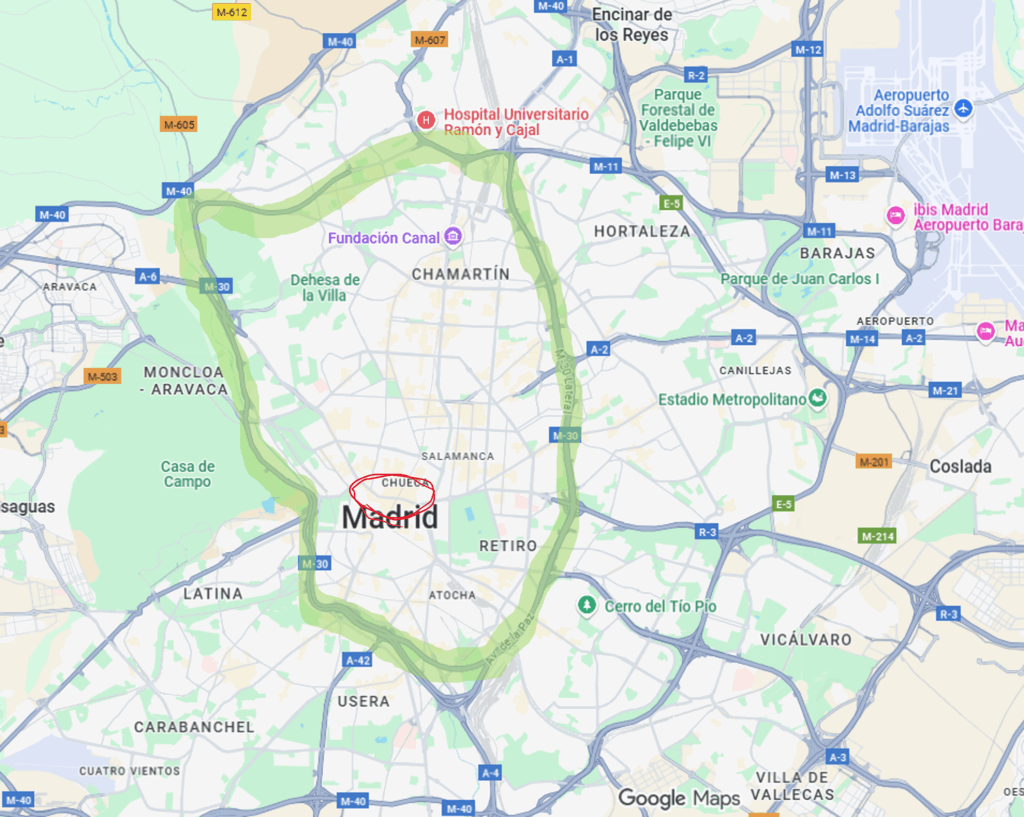
First, a general description of the city and its divisions. There’s the Madrid Province, which covers about 3088.82 mi², and the Madrid Municipality, a much smaller area of around 231.66 mi² where the actual city lies. In this guide, I’ll focus on the Municipality, the part most visitors explore.
When locals talk about “the center”, they usually refer to areas like Sol, Gran Vía, and Plaza Mayor — where all the famous landmarks are. But as with many growing cities, the idea of “the center” keeps expanding. Nowadays, the M-30 highway, which loops around the city, often serves as a mental boundary: if you live inside the M-30, you’re in central Madrid. Although, as we can see in the image, it is not 100% true, since you can be closer to the center by living in Usera (south) than to the northern limit of the M-30.
Table of Contents
Where to stay in Madrid
The most touristy experience
Zones: Plaza de España · Centro · La Latina · Malasaña · Chueca
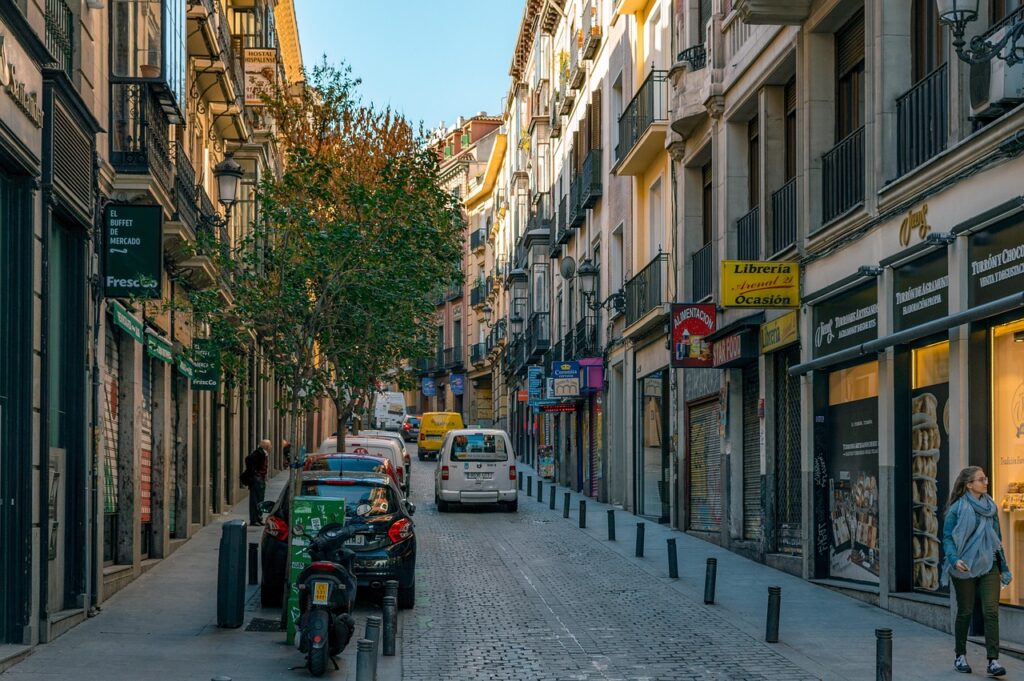
Centro (Ópera). Photo credit: AKuptsova
Why these places?
Because you’ll be immersed in the experience. Trust me, it makes a big difference to having to come and go from the zone you’re staying to the actual places you’ll hang around. When living in these neighborhoods, you don’t stop living that excitement. Just the second you step out of the door, and even by looking through the window, you’ll be into the area you wanna explore, maybe it’s the bar you’ll seat in, the coffeeshop you’ll go, the little classic streets and the pure buzz and bustle of Madrid.
Considerations:
- It can get very crowded. Especially at the end of the year.
- As is touristy, it can be noisy at late hours. You can avoid this by choosing a place that doesn’t face a main street or an extremely popular place. Not just a steps away from a club or a crowded bar. Don’t get discouraged. You’d be surprise of how calm it can be a street right in the heart of the city center.
A calmed touristy experience
Zones: Barrio de las Letras · Conde Duque · Noviciado · Arganzuela
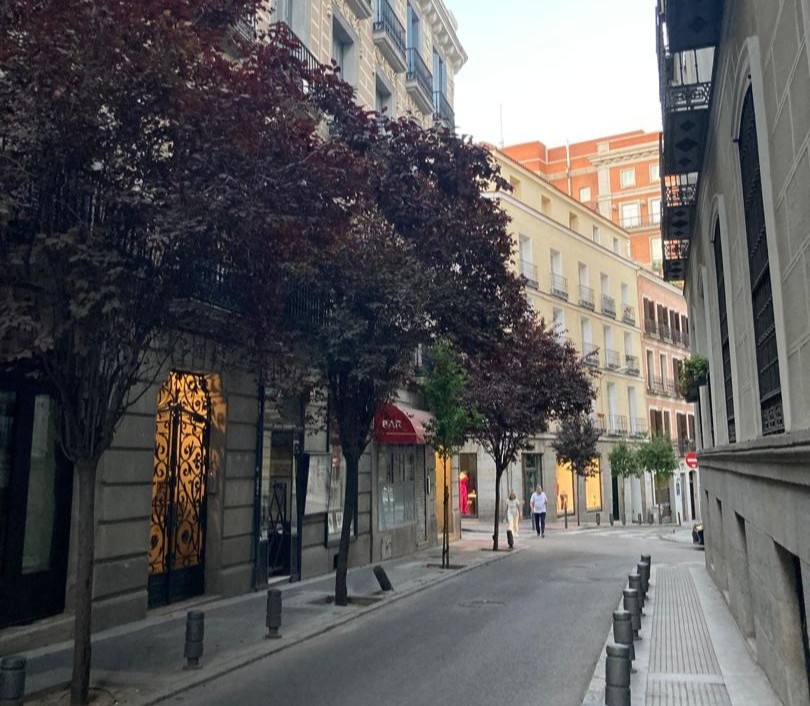
Barrio Las Letras
Why these places?
Because you get the best of both worlds. In Barrio de las Letras, you’ll walk along quiet cobbled streets where writers like Cervantes once lived, surrounded by cozy wine bars and boutique hotels.
Conde Duque and Noviciado sit right next to Malasaña but feel more local and laid-back. You’ll find cute cafes, vintage stores, and everyday life instead of the loud nightlife.
Arganzuela is more residential. It’s peaceful and beautiful, without being far.
Considerations
- If you want to go out at night, you’ll probably have to go to the center.
- In these neghborhoods, there are still crowded streets, but most of them are quiet. The contrast is big, because you could pass from a street full of people, boulevard kind of style, and then: total calm, maybe just one or two people per block.
- Barrio Las Letras can get really quiet at night, and some streets are dark, with just few restaurants or bars that open till midnight.
An elegant stay
Zones: Salamanca · Recoletos · Colón · Alonso Martínez
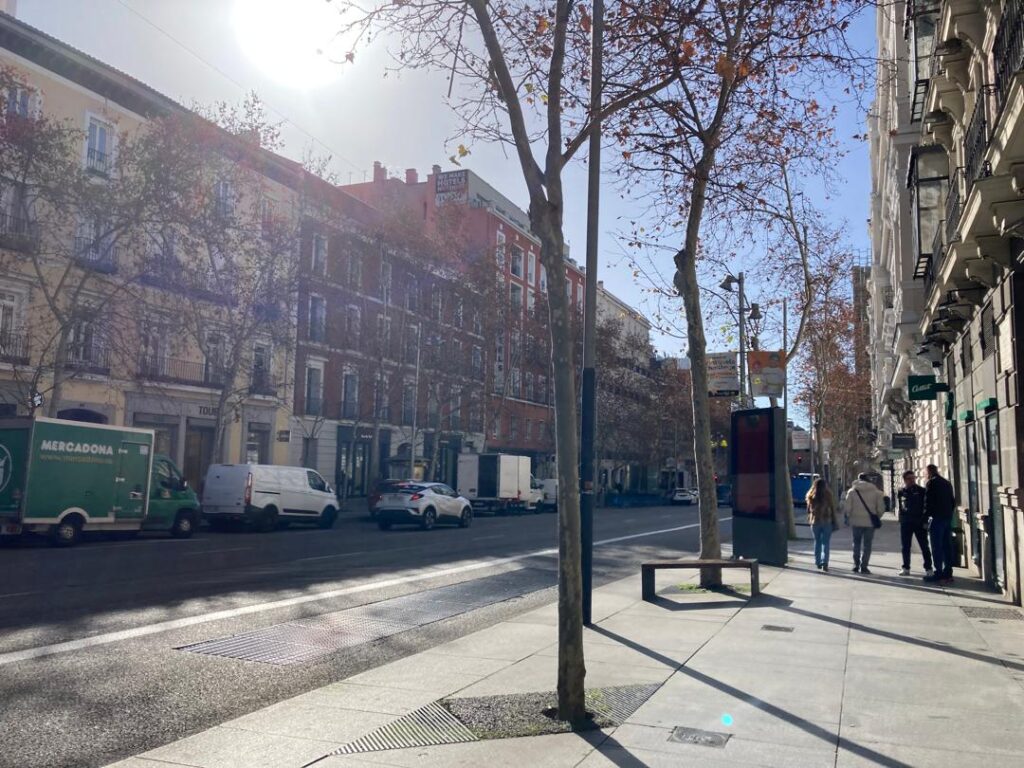
Alonso Martínez
Why These Places?
To experiment the high-end atmosphere and stylish European buildings. These are places where shops take out their fanciest version.
Salamanca is the city’s classic upscale district — think designer stores, tree-lined streets, and beautiful old buildings. Very walkable.
Recoletos and Colón are nearby, with that same refined vibe, close to Retiro Park and some of Madrid’s nicest restaurants.
If you prefer something stylish but less formal, Alonso Martínez is a great pick. It has that “local professional” feel — classy, clean, and very comfortable.
Also, everything in Calle de Alcalá (one of the main streets of the city), the part that’s from Sol to Ventas, usually has a high-end feel. Actually, one of the most expensive hotels in Madrid is there, the Four Seasons Hotel.
Considerations
- These areas are among the most expensive in Madrid, so accommodation prices reflect that.
- At night they’re pretty calm — more about dinner or a glass of wine than bars or clubs.
Low-cost stay
You’d think that the farther you go, the cheaper it is to stay in Madrid — but that’s not always true. Some neighborhoods just outside the Center District offer better deals than the suburbs beyond the city limits.
Zones: Delicias · Cuatro Caminos · Ciudad Lineal · Pacífico · Otros
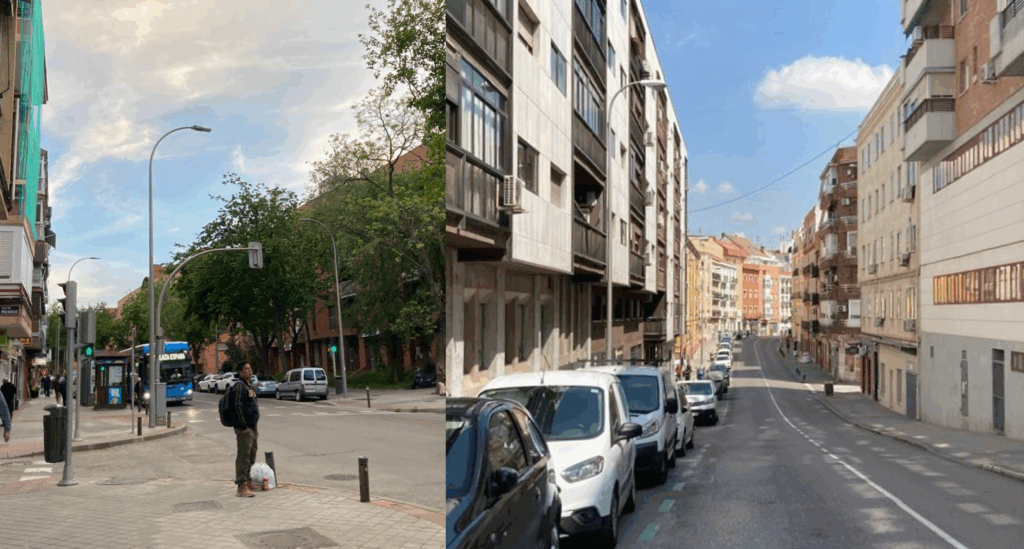
From left to right: San Isidro, Cuatro Caminos
Why These Places?
Delicias and Cuatro Caminos are close enough to the center that you can get there quickly (just 5 subway stations away to the city center). These neighborhoods are really local, not touristy. Orange middle-class buildings, parks for children and affordable rentals.
If you don’t mind going a bit further out, Ciudad Lineal and Pacífico are calm, safe, and cheaper. Quiet neighborhoods where everyday Madrid can be experienced.
Some other cheap zones (but not “as cute”) are: Puerta del Ángel, San Isidro, Usera, and Tetuán. Here you may not see fancy shops nor places for bruch, but you’ll see many local markets, bars where neighboors meet, and small bussinesses.
Considerations
- Try to pick places near a metro stop (max. 12 minutes walking); that makes a huge difference.
- Many of the people that live in these neighborhoos are inmigrants, especially from Asia and Latin America.
Coming for work
If you’re coming to Madrid for business or a short period work, you’ll want somewhere close to your meetings or the office area. This can make your life much easier. Here I’ll list the typical zones where businesses offices are (it may not apply to you if your workplace isn’t around these).
Zones: Nuevos Ministerios · Chamartín (Cuatro Torres) · Barajas
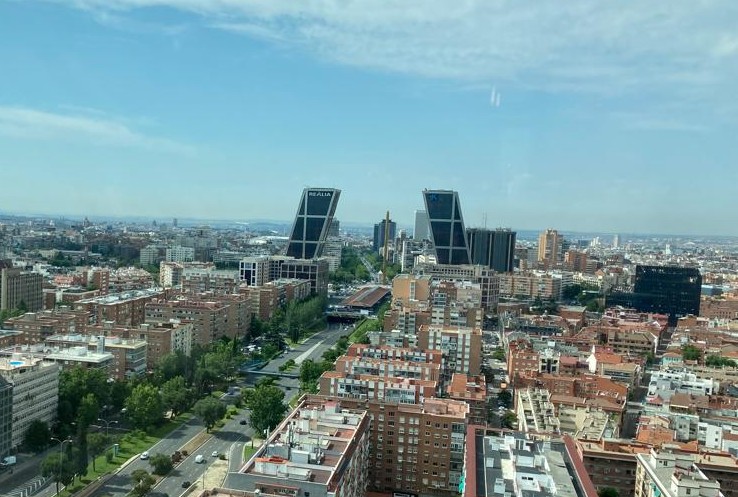
View of Plaza Castilla along Av. Paseo de la Castellana
Why These Places?
Nuevos Ministerios and Chamartín are business hubs — modern, clean, and full of services. They’re great if your work is in one of the big companies or government offices nearby. There are also a lot of places for lunch and co-working.
If you’re attending a conference or event in IFEMA or if you’re flying in and out often, Barajas and the neighborhoolds nearby (San Blas, Hortaleza) are convenient — quiet residential streets, local restaurants, and you can reach the city center in 30–40 minutes by subway.
Considerations
- These areas are well-connected by metro, train, and bus, but rush hour can be intense. If you’ll be commuting daily, check your route before booking.
- After work, most people go home, so if you want a lively bar scene you’ll need to head to the center.
- Weekends are quiet too, some streets can feel empty compared to the energy of central Madrid.
Traveling with family
Zones: Retiro · Chamberí · Retiro · Fuencarral (the district, not the street)
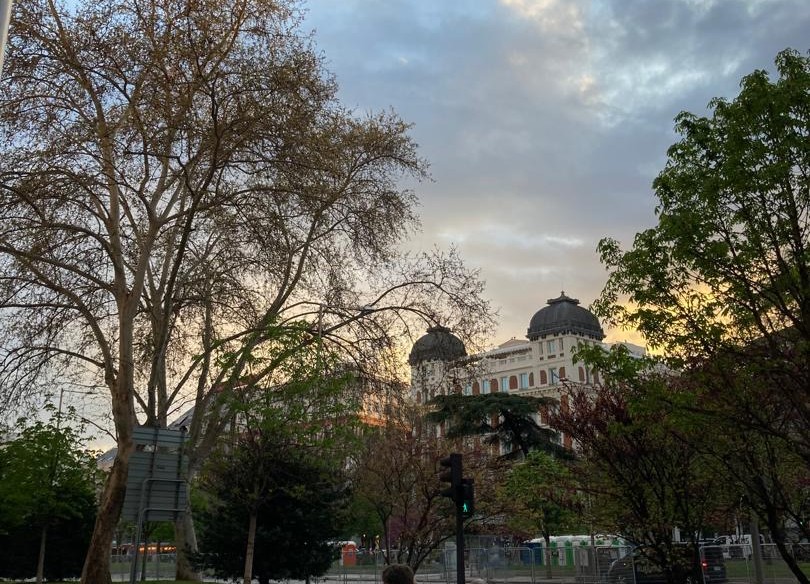
Chamberí
Why These Places?
If you’re coming with family, you’ll probably want somewhere calm, safe, and with parks nearby. Madrid is great for that — most neighborhoods have green areas and playgrounds. These districts are peaceful and practical.
Retiro is perfect if you like going out for a walk or want the park right there for the kids.
Chamberí is central but still quiet, full of cafés, schools, and small squares.
Fuencarral – El Pardo District is more residential, with bigger apartments and less noise. It’s almost like a suburb.
Considerations
- These are well connected areas , but you’ll use subway or bus often.
- They don’t have nightlife, which is probably a good thing if you’re with family.
- You’ll find more apartments than hotels, which can be better for longer stays.
You’re a digital nomad
Depending on how nomad you are, and your budget, I’d prioritize areas that are quiet well-connected to be able to focus on work, while exploring the city easily. Also, if you travel frequently inside or outside Spain, I’d choose an affordable neighborhood to not pay a lot for a place I’d barely frequent.
Zones: Madrid Río · Prosperidad · Chamberí
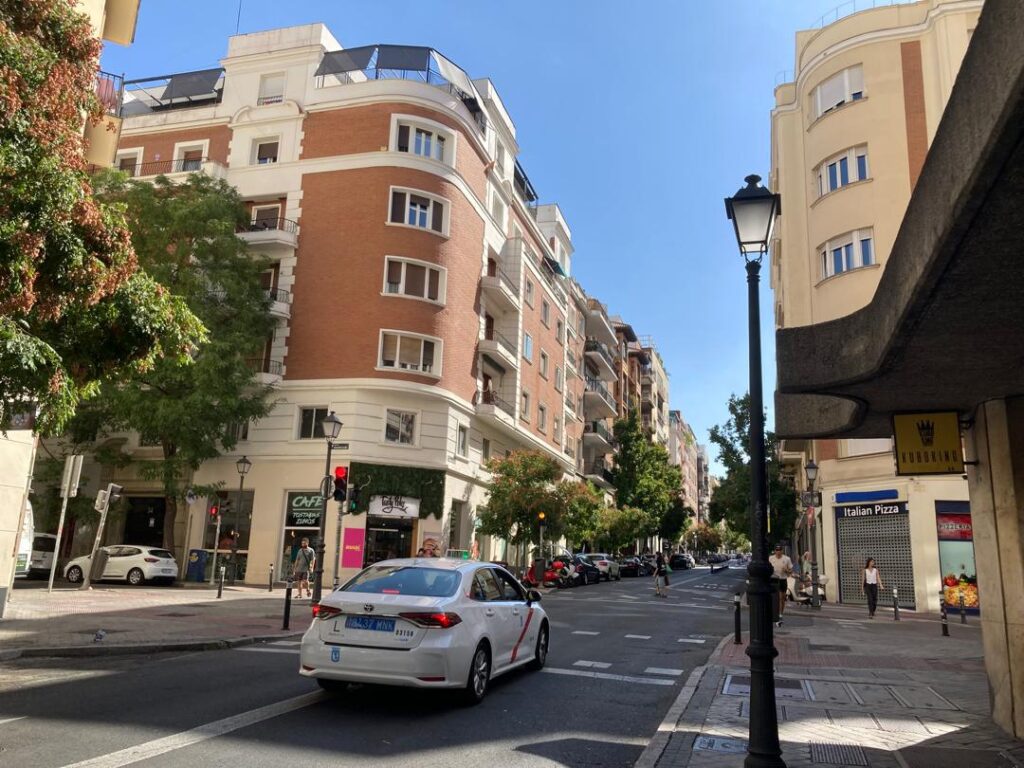
Chamberí
Why These Places?
Madrid Río is great if you like open spaces and nature — you’ll have the river park for walks or exercise. It’s like an oasis in the middle of the city, but you may not be as well-connected by public transport as the other zones we’re mentioning in this category.
Chamberí is local, central, and full of places directed to nomads where you can work for hours without rush. It’s calm but never boring.
Prosperidad is further north, modern and well-connected, with reliable transport and comfortable apartments.
Considerations
- In Chamberí there’s a considerable amount of foreigners and an English-speaking community (young professionals and nomads).
- For short-term rentals, prices can be high, so it’s worth checking for monthly apartments.
Final notes
Overall, Madrid is a very convinient city that welcomes everyone in a friendly manner. Most of the neighborhoods are well-organized in terms that wherever you live, you’ll have nearby a supermarket, a bus stop or a subway/train station, a gym, and a health center. Check this out anyways when choosing where to stay in Madrid.
Some other tips and side notes:
- Use the street view functionality to check the place to see if you find yourself staying there this time.
- If you’re staying during summer, make sure your place has air conditioning — Madrid gets hot.
- In Madrid is very common to live and even stay in just one bedroom in a full-house or apartment.
- I don’t recommend Villaverde and Villa de Vallecas districts, because as a general norm, everything far south can feel less safe.
Finally, these are general recommendations, and Madrid has more great districts, don’t limit yourself to the ones mentioned here. For example when recommending Chamberí district, it compounds all the neighborhoods within: Gaztambide, Arapiles, Trafalgar, Almagro, Ríos Rosas, and Vallehermoso.
…
I hope this information is useful to you, or at least gives you a general idea of the city 😊
For more content about what I’ve learned living in Spain, you can visit Nomad in Spain.